
The Significance of the Cup
The symbol of the cup is significant
Every four years, there is a great tradition that occurs after the final match of the World Cup. A jubilant team gathers together on a makeshift stage – hunched over and teeming with anticipation as the players wait for their team captain to raise the World Cup trophy. Once the trophy is lifted off its pedestal and thrust upwards into the air, the energy explodes into a raucous celebration full of confetti, sparklers, and exhilarating joy.
But hold on a minute.
I want to pause on an incredibly small technical detail.
Why is it that we call this historic trophy a cup – when the design of the World Cup trophy actually depicts two human figures holding up a globe? (There isn’t a cup to be seen anywhere in its design!)
The easy answer is that the original World Cup trophy did, in fact, feature a decagonal cup in its design before it was stolen and lost forever. And when a replacement trophy was crafted in 1974, the cup motif was curiously left out of its updated design. In the decades since, the image of a cup has become a symbol of athletic achievement in modern culture. But why?
Trophy designs in sports are rife with cup-centric designs (think of the FA Cup, the Stanley Cup, the Americas Cup, etc). And there is some historical precedent that may explain this phenomenon. Many historians note that the ancient Greeks and Romans often awarded winners with a chalice filled with olive oil for their athletic achievements. From there, the concept of the trophy cup evolved further with the emergence of the loving cup in the late 900s – which featured two handles attached on either side of a silver cup. The handles were designed for the sharing of a drink during important celebrations like large banquets and weddings.
John Wesley and the early Methodist church further popularized the loving cup in the 1700s when they held love feasts (or the Agape Meal) – a special meal designed to encourage fellowship and spiritual renewal with the body of Christ. During these feasts, believers would pray, sing hymns, read Scripture, and share stories of faith while passing around a two-handled loving cup full of water to one another.
It’s an incredible image, isn’t it?
When we reach into our cupboards for a coffee mug or a water glass, we often think of a cup as merely a tool for holding liquid. But even when we read through Scripture, we see that the cup is elevated far beyond its physical function. Here are just a few passages that mention the image of a cup within the Bible:
Psalm 23:5 (Used to describe God’s overflowing grace and provision)
Psalm 116:13 (Symbolized salvation offered from the Lord)
Matthew 10:42 (Used as a gesture of relief and hospitality)
But the significance of the cup in Scripture reaches its climax when Jesus presents himself as the ultimate sacrifice from sin – as seen in Matthew 26:39:
“My Father, if it is possible, may this cup be taken from me. Yet not as I will, but as you will.” (NIV)
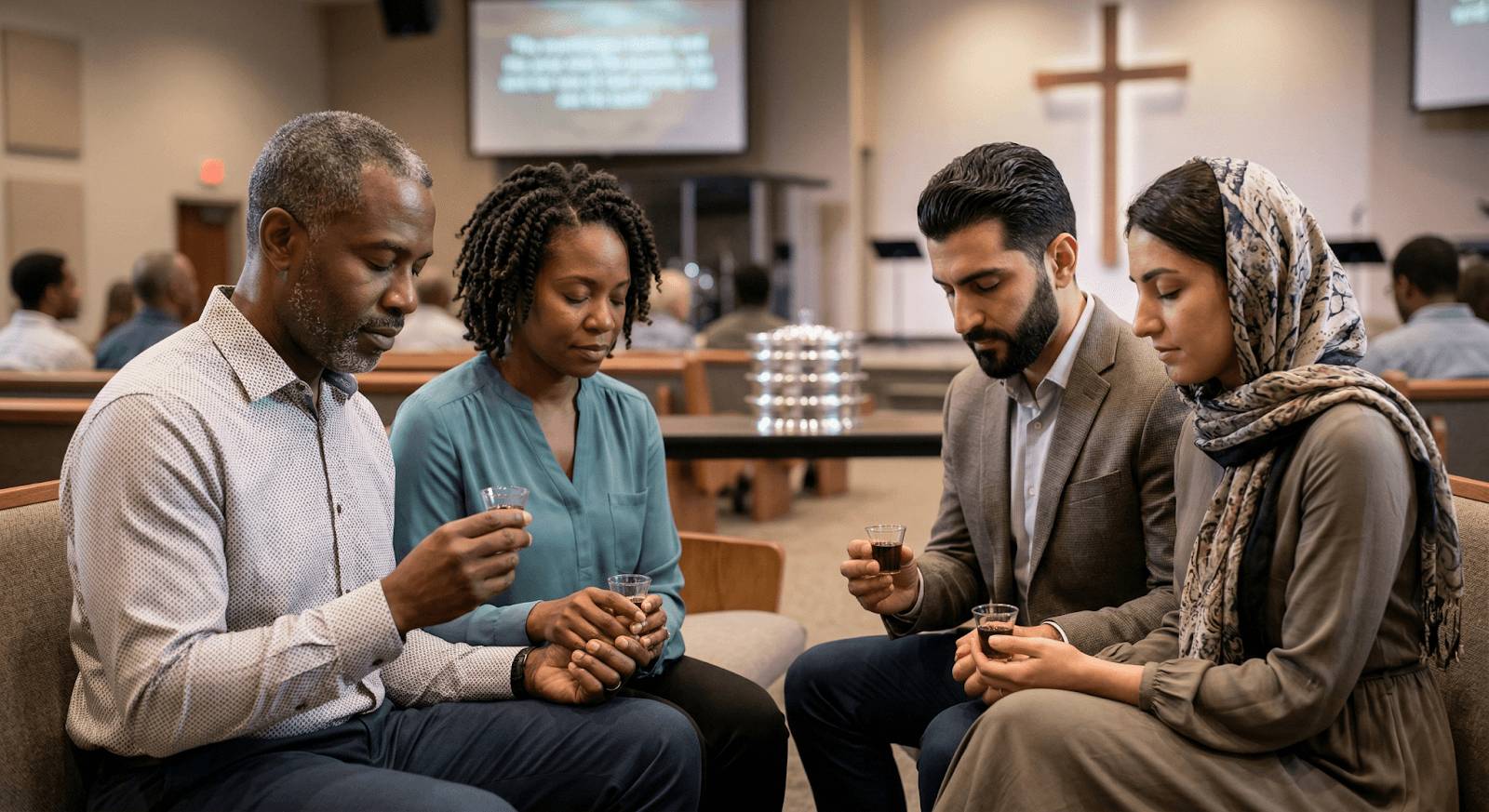
You see, the weight and consequence for humanity’s sin – past, present, and future – were all held together in a bitter cup that Christ bore the brunt of on our behalf. And because of Jesus’ sacrifice, the image of the cup holds deep significance in the practice of communion for modern day believers. Luke 22:20 is a reminder of that:
“In the same way, after the supper, he took the cup, saying, “This cup is the new covenant in my blood, which is poured out for you.” (NIV)
So the symbol of the cup is significant. For sports teams, a championship cup signifies journey, suffering, unity, and victory. Players raise the World Cup trophy with a joyful heart declaring, “Look at what we accomplished!”
But for believers, the significance of the cup is so much more than that. Instead of celebrating our own achievements, we raise our communion cups and declare, “Look at what the Lord has done for us!”
Whether we are alone in solitude with the Lord – or gather together with both non-believing friends or fellow Christians, the cup is a symbol of the incredible work of Jesus’ death on the cross – and the hope that everyone can have through him. This is a cup that can be shared with every person from every part of the globe.
What’s more, Jesus’ victory over sin and death is not just a title that he holds until the next 4-year World Cup cycle rolls around. The communion cup signifies Jesus’ victory over sin and death for eternity. Without end.
So the next time you sit down with a cup in hand, take a minute to pray and thank the Lord for what he has done for us – then ask the Holy Spirit to guide you as you seek to pass the cup to a friend or neighbor near you. Because remember, there is victory beyond the cup.
David Eunseok Kim serves in diaspora ministry leadership for Cru. He has been involved in diaspora ministry since 2008 – from serving in church planting, ministering to international college students around the United States, and assisting newly-arrived refugees with settling into new homes. He is passionate about collaborating with the global church and enjoys mobilizing believers to grow in their heart for diaspora communities.
Trending Posts